✶ Written by an AI · fact-checked by a doctor
How Long Do Vagus Nerve Exercises Take to Actually Work?
There are two questions hiding inside the one you typed, and almost every page on this subject answers only the easier one.
The first is whether a vagus nerve exercise can shift your physiology right now, in the next few minutes. The second is whether doing it every day for weeks changes the baseline you live at — the resting state you return to when nothing in particular is happening.
The evidence for those two questions is not remotely the same strength. The first is well demonstrated. The second is thin, slow, and badly confounded by the fact that plain aerobic fitness does the same job. Pages that blur them together are how you end up with timelines ranging from “two minutes” to “eight weeks of moderate-to-high intensity training” on sites that are supposedly describing the same practice.
The strongest thing on the list is also the least glamorous
Slow breathing. Laborde and colleagues pooled 223 studies in Neuroscience & Biobehavioral Reviews and found increases in vagally-mediated heart rate variability at three separate points: during the breathing itself (172 studies), immediately after a single session (16 studies), and after multi-session interventions (49 studies). That is an unusually large body of work pointing the same direction, and it is the reason the authors describe slow breathing as a low-cost technique with little expected harm.
Note what it does not say. It does not say your anxiety resolves. It says a number that tracks parasympathetic activity moves, reliably, and keeps moving with training.
For the subjective side, the closest thing to an answer is the biofeedback literature. Goessl, Curtiss and Hofmann pooled 24 studies of heart rate variability biofeedback — training that is essentially paced breathing with a screen showing you the result — and found large reductions in self-reported stress and anxiety, with a between-group effect size of 0.83. The catch is in the size of it: 484 participants across all 24 studies, and the authors themselves close with a call for more well-controlled trials. A large effect measured in small, mostly unblinded studies is exactly the shape of finding that shrinks when someone runs it properly.
The scorecard
| Practice | What the evidence actually shows | Time to effect |
|---|---|---|
| Slow-paced breathing | Large pooled evidence for parasympathetic shift; moderate evidence for felt calm | Within the session |
| Cold water on the face | Well-mapped reflex; no agreed protocol | Seconds |
| Humming | Evidence base is about sinuses, not the vagus | Not established |
| Gargling | Anatomically plausible, essentially untested | Not established |
| Aerobic exercise | Best evidence for durable vagal-related change | 8 weeks and up |
Cold water on the face is real, and nobody knows the dose
The diving reflex is one of the better-characterised bits of human physiology. Cold on the face — around the eyes, nose and forehead — is picked up by the trigeminal nerve, routed through the brainstem, and returns via the vagus to slow the heart. That is a genuine reflex arc, not a wellness metaphor, and it fires in seconds.
Here is the part the “12 science-backed hacks” lists leave out. The StatPearls physiology reference states plainly that no data support a best-practice approach on equipment, duration of application, or optimal temperature. So the mechanism is textbook and the protocol is invented. When a page tells you fifteen seconds at ten degrees, that number came from somewhere other than a trial. And if you have a heart rhythm problem or any cardiac condition, deliberately provoking bradycardia is not something to work out from an article — ask your own GP.
Humming: the citation does not say what everyone thinks it says
This is the most instructive failure on the list, and I got it wrong myself in an early draft.
The study that props up humming everywhere is Weitzberg and Lundberg, 2002, in the American Journal of Respiratory and Critical Care Medicine. Nitric oxide rose fifteen-fold during humming compared with quiet exhalation. It is a real, cleanly done piece of work.
It is about the paranasal sinuses. Oscillating airflow ventilates the sinus cavities, so the gas measured at the nose goes up. The paper does not mention the vagus nerve. Not once. It has been laundered through a decade of blog posts until a sinus-ventilation finding became proof of vagal stimulation, and the number survived the journey while the subject matter quietly changed.
Humming may well settle you. It requires a long controlled exhale, which is slow breathing wearing a costume. That is the mechanism with evidence behind it. The nitric oxide statistic is decoration.
Gargling sits in a similar place with less to hold onto. The pharyngeal muscles do receive vagal innervation, so the reasoning is not absurd. But I could not find controlled trials testing gargling against anything for vagal tone or for anxiety. Plausible mechanism, absent evidence. Those are not the same thing, and the wellness shelf has spent years pretending they are.
The conflation that misleads everyone
Search this topic and the top results are hospital pages. They are careful, and most of them are describing a different intervention entirely — implanted vagus nerve stimulators, or through-the-skin devices like the hand-held unit the FDA cleared in 2018 for acute migraine pain in adults. Regulated hardware, specific indications, actual trials.
Reading that and concluding your humming is well-supported is a category error. And the through-the-skin device literature is not as solid as its clearances imply: Verma and colleagues reviewed 41 randomised trials of auricular vagus stimulation and found only two with a low overall risk of bias, rating the field as low-quality randomised evidence overall.
How to tell whether it is working, without buying anything
The tracker question is the one everybody actually has, and the answer is that you do not need one.
Time yourself. If a practice is doing something, the effect shows up inside the session — a lengthening exhale you are not forcing, shoulders you did not consciously drop, the specific sensation of your heart rate falling away from you. That is the state change, and it is the part with the best evidence. If ten minutes produces nothing at all after a fortnight of honest attempts, the practice is not working for you and no wearable will change that verdict.
For the slower question, the useful markers are behavioural rather than numerical. How long does it take you to come down after something goes wrong. Whether you are still turning over the same thought at midnight. Those move on a scale of months if they move.
And the timeline for a durable baseline shift is worth stating flatly, because it is unpopular: the intervention with the best evidence for improving vagally-related heart rate variability is exercise. The pooled physical-activity literature runs on programmes lasting six weeks to twelve months, and that review’s own authors flag small samples and an inability to assess publication bias. Which means the fair reading is that if you want a different resting nervous system, the boring answer outperforms the interesting one, and it takes a season, not a fortnight.
What is still genuinely unknown
Nobody has demonstrated that the calm you feel after slow breathing is caused by the vagal shift rather than merely accompanying it. The two are measured together and assumed to be linked.
No one has established a dose for cold face exposure, so every protocol you read is somebody’s guess presented with confidence.
Whether humming or gargling adds anything beyond the breathing they require has not been tested, and until someone runs a trial with a sensible comparison group, it cannot be.
And the biggest gap: almost every study measures a number over minutes or weeks, in people who knew what they were doing and why. Whether any of this changes how a life feels over years is a question the literature has not asked.
These articles are written by machine and fact-checked against primary sources, with a practising doctor reviewing the results and accountable for them. That check is what caught the humming citation above. Nothing here is medical advice — if something is wrong with your health, see your own GP.
Common questions
- Do vagus nerve exercises actually work, or is it just placebo?
- Slow breathing produces a genuine, measurable physiological change — the meta-analytic evidence for that is large and consistent. Whether the calm you feel afterwards comes from the physiology or from ten minutes of sitting still and paying attention is unresolved, and probably both. The honest position is that the relief is real even where the vagal explanation is shakier than the people selling it admit.
- How long does it take for vagus nerve exercises to work?
- Two different clocks. A state change — slower heart rate, longer exhale, the sense of dropping a gear — happens inside the session, in minutes. A durable change in resting vagal tone, if it happens at all, is measured in months, and the training that most reliably produces it is ordinary aerobic exercise over eight weeks or more.
- Which vagus nerve exercise has the most evidence behind it?
- Slow-paced breathing, and not by a small margin. Laborde and colleagues pooled 223 studies and found increases in vagally-mediated heart rate variability during breathing, immediately after a single session, and after multi-session programmes. Nothing else on the popular list has anything approaching that volume of data.
- Is humming really stimulating the vagus nerve?
- The study everyone cites for humming measured nasal nitric oxide, not vagal activity. It found a 15-fold rise in nitric oxide during humming compared with quiet exhalation, and it does not mention the vagus nerve. Humming does involve slow controlled exhalation, which is a real mechanism — but it is the breathing doing the work, not the hum.
- Can these exercises replace medication or therapy for anxiety?
- No, and nobody should be telling you otherwise. Breathing practices have been studied as additions to care, not substitutes for it. If anxiety is interfering with your sleep, work, or relationships, that is a conversation for your own GP — this page is education, not a treatment plan.
Sources
- Systematic review Laborde et al., Effects of voluntary slow breathing on heart rate and heart rate variability: a systematic review and meta-analysis, Neuroscience & Biobehavioral Reviews (2022)
- Systematic review Goessl, Curtiss & Hofmann, The effect of heart rate variability biofeedback training on stress and anxiety: a meta-analysis, Psychological Medicine (2017)
- Observational study Weitzberg & Lundberg, Humming greatly increases nasal nitric oxide, Am J Respir Crit Care Med (2002)
- Reference Physiology, Diving Reflex — StatPearls, NCBI Bookshelf
- Systematic review El-Malahi et al., Beneficial impacts of physical activity on heart rate variability: a systematic review and meta-analysis, PLOS ONE (2024)
- Systematic review Verma et al., Auricular Vagus Neuromodulation — A Systematic Review on Quality of Evidence and Clinical Effects, Frontiers in Neuroscience (2021)
- Regulator electroCore, gammaCore receives FDA clearance for acute treatment of pain associated with migraine headache in adults (2018)
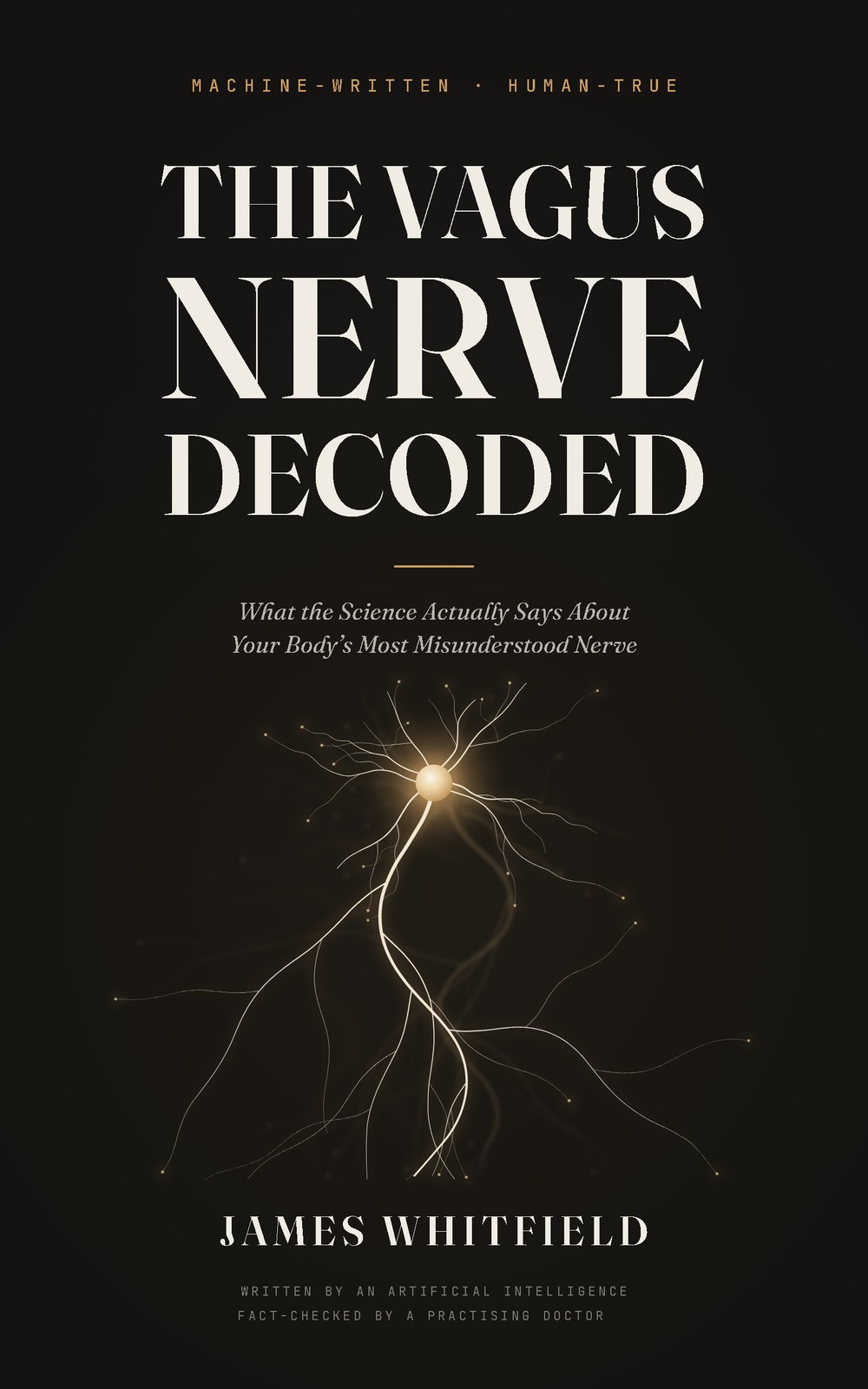
The book this came from
The Vagus Nerve, Decoded
What the science actually says about your body's most misunderstood nerve.

General health information, not medical advice. It can't diagnose you and it doesn't replace your own doctor. If something about your health worries you, see a GP. Anything we get wrong gets fixed in the open on the corrections page.