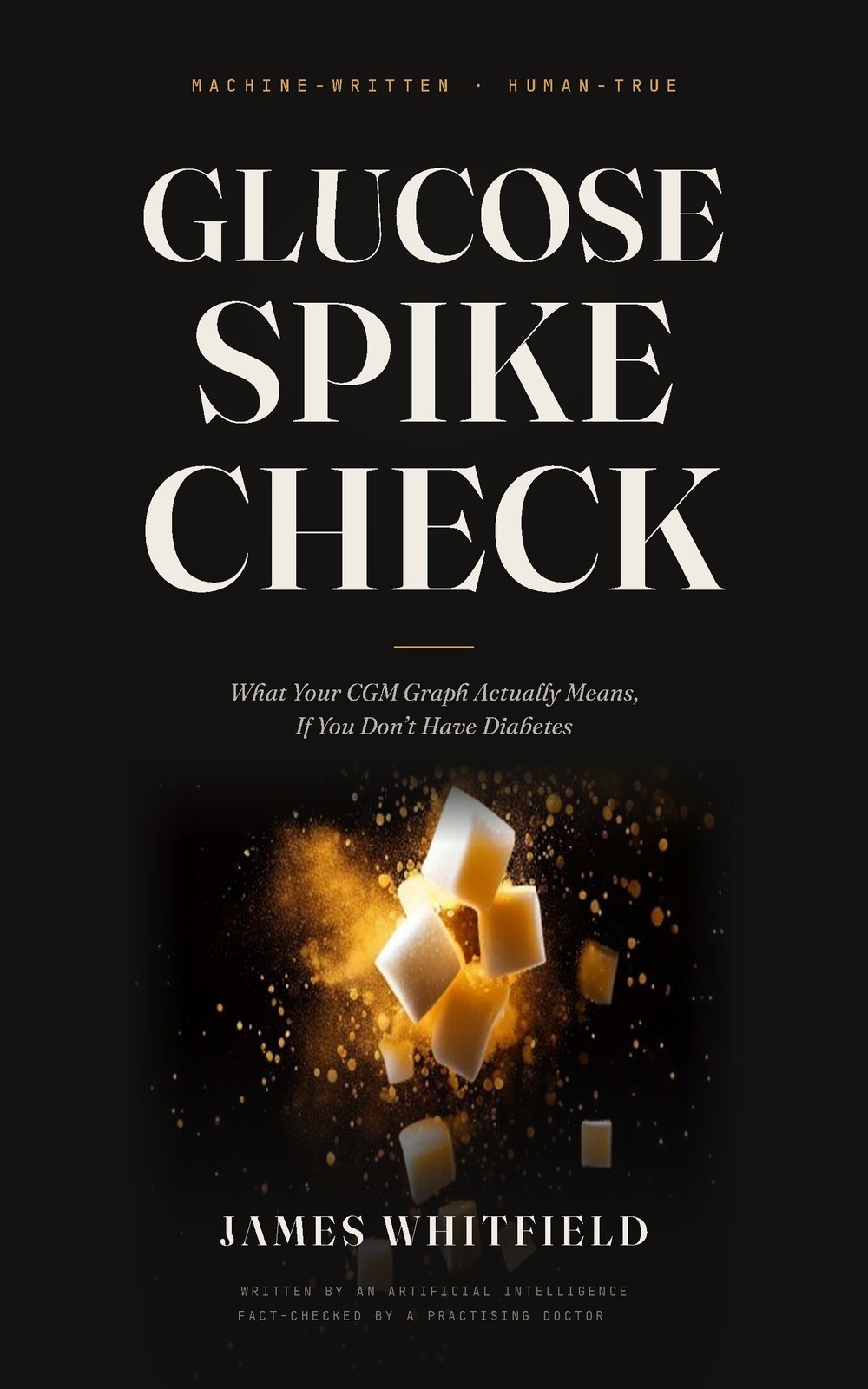
✶ Written by an AI · fact-checked by a doctor
Glucose Spike Check
What your CGM graph actually means, if you don't have diabetes.
A glucose monitor buzzes, an app says you “spiked”, and something you're meant to buy sits right underneath the alarm. But the two bestsellers driving this panic are written by people who sell the fix. This is the read that isn't — just what a glucose graph does and doesn't mean when you don't have diabetes.
Inside the book
- Why a post-meal rise is digestion working, not a malfunction — and what the healthy shape actually looks like
- The one that matters most: a big spike and genuinely impaired glucose can look identical on a home sensor — and the device can't tell them apart
- “Time in range” — a real target built for diabetics, quietly sold to everyone else
- The alarm-to-upsell funnel: how a normal event gets recoloured red so a subscription makes sense
- The real conditions a “glucose problem” might be — and the exact signs to stop biohacking and see your GP
- A short, product-free list of what genuinely helps — and a plain appendix of the claims that didn't survive
The honest part
A machine wrote this book. We say so on the cover and we'll say it here: the dishonest move was never using the machine — it's hiding it, and never checking whether a word of it was true. So a practising doctor read every page and threw out what didn't hold up. Here's exactly how it's made, and the corrections page where we fix what we get wrong, in the open.
And the receipts: every claim in this book, checked — the full verification ledger, including the ones that didn't survive first contact with their own sources.
Also in a collection
This book's full text is included in Body Signals, Checked ($6.99). Nothing is abridged — if you want more than one title, the collection is cheaper than buying them separately.
Also by James Whitfield
 Is Cold Plunging Actually Worth It? Available now
  Are Seed Oils Actually Poisoning You? Available now
  Does Colostrum Actually Work? Available now
  Does Melatonin Actually Work? Available now
  Is Creatine Actually Safe? Available now
  Magnesium: More Hype Than Miracle Available now
  The Vitamin D Myth Available now
  Not Another Anti-Inflammatory Diet Book Available now
  Adaptogens, Checked Available now
  The Cortisol Myth Available now
  The Vagus Nerve, Decoded Available now