✶ Written by an AI · fact-checked by a doctor
How Would You Know If You Had Chronic Inflammation?
Type the question and you will be handed a list. Fatigue. Bloating. Brain fog. Aches. Poor sleep. Skin trouble. Low mood.
Read it honestly and you will notice something: it describes almost everyone, almost all the time. That is not an accident of writing. A checklist that fits nearly every adult converts extremely well into a purchase, and it is why the same seven items appear on page after page above a link to a supplement.
The real answer to the question is stranger and much less useful commercially. Mostly, you would not know.
Chronic inflammation is not a feeling
Acute inflammation you can see. The four classic signs — redness, heat, swelling, pain — are the immune system working correctly. Without that response, wounds do not heal: the early inflammatory phase is a required stage of tissue repair, and people whose response is blunted heal slowly and badly. Inflammation is not the enemy in the story. It is the mechanism.
Chronic inflammation is a different thing that borrowed the same word. It is low-grade, persistent immune activation humming along for months or years. It is measured indirectly. And it is not what you mean when you say you ate badly this week and feel puffy — bloating, tiredness and brain fog are not a readout of the immune system, however confidently a landing page states otherwise.
That gap between the two meanings is where the entire industry lives.
The marker everyone points at, and what it can carry
The usual next step is a CRP or high-sensitivity CRP test. It is a genuine, useful measurement, and it is a non-specific one. It rises with infection, with injury, with an ordinary cold, with carrying extra weight, and even after a hard session in the gym.
So a raised CRP tells you something is going on. It does not tell you what. It is a signpost, not a destination — a marker of inflammation rather than a diagnosis in its own right. The correct response to a high result is to look further, which is exactly the step that a number arriving by post with no clinician attached does not prompt.
At-home inflammation tests are the sharpest version of this problem. One non-specific marker, one number, no interpretation. It cannot rule inflammatory disease in or out. Both ways of being wrong are harmful: false reassurance that delays a real diagnosis, or false alarm that sends someone shopping.
The scorecard
| Question | Honest answer |
|---|---|
| Can you feel chronic inflammation? | No — it is defined as low-grade and clinically silent |
| Do the online symptom lists identify it? | No — they are non-specific and near-universal |
| Does a CRP result diagnose it? | No — non-specific marker, prompts a look, not a verdict |
| Is chronic inflammation real science? | Yes — legitimate, active, in real disease biology |
| Does lowering a marker with food prevent disease? | Not established — the marker may be a bystander |
The swap at the centre of it
Here is the move to watch for, because once you see it you cannot unsee it.
“Lower your CRP with food and you are preventing disease” trades a moved marker for a prevented illness. Those are not the same thing, and the distance between them is where most of this category’s claims live.
Whether nudging the marker itself delivers the payoff — less heart disease, less cancer, more years — in an otherwise healthy person is not settled. The marker may be a bystander: something that goes up alongside the disease process without driving it. The best evidence that inflammation is causal comes from the opposite direction entirely, from serious drug trials built to test whether dialling inflammation down changes hard outcomes. That is a pharmaceutical question asked with a monoclonal antibody, not a dietary one asked with turmeric.
What our own fact-check threw out
The book behind this article originally carried a broader statement about anti-inflammatory eating than the evidence supports. Three blind checkers marked it misstated, unanimously: no randomised trial shows an anti-inflammatory diet reversing or curing a defined disease through hard clinical outcomes. The claim outran the record and was cut back to what the record holds.
That is worth stating plainly here because this article is about not overclaiming, and the honest version of the argument has to survive being applied to itself. Every verdict from that check, including the failures, is published on the inflammation verification ledger.
Chronic inflammation is real. It is just not a consumer diagnosis
None of the above says the biology is fake. As a research construct, chronic inflammation is legitimate and active — woven into how arteries fur up, into metabolic disease, into ageing. Rheumatoid arthritis, inflammatory bowel disease and lupus are real diagnosed conditions where the immune system attacks the body’s own tissue, and they are treated with disease-modifying drugs and targeted therapy. Swapping that treatment for a diet risks joint damage or bowel damage that does not come back.
The overreach is not the science. It is the conversion of a research construct into something you can self-diagnose from a listicle and shop your way out of.
What would actually change your inflammatory load
If you want the version with evidence behind it, it is unglamorous and none of it comes in a jar.
Not smoking is the single clearest modifiable contributor — smoking reliably raises inflammatory markers, and stopping lowers them. Physical activity associates with lower markers, with a reasonable dose-response. Short and poor-quality sleep associate with raised markers. Carrying excess weight, particularly around the middle, associates with higher markers. And a broadly Mediterranean-style pattern — vegetables, legumes, fish, olive oil, whole grains, less ultra-processed food — is the strongest signal in the whole diet-and-inflammation literature.
Note that it is a pattern, not a food and not a supplement. Nobody has shown that one ingredient does the work, and the ones sold hardest are the ones with the least behind them.
The list that actually warrants a doctor
Since the real question underneath “how would I know” is usually “should I be worried”, here is the version worth acting on.
Unexplained weight loss you did not try for. Persistent joint swelling. Blood in your stool. A prolonged or recurrent fever. Night sweats that soak the sheets. And separately, urgently: fever plus feeling very unwell, or the signs of a spreading infection, can be sepsis — that is measured in hours.
Those are the signals. They are not on the fatigue-and-bloating checklist, and none of them are a diet question.
What is still genuinely unknown
Whether the marker is a driver or a passenger in most people. Whether moving CRP in a healthy person changes anything that matters to them. And where the boundary sits between the low-grade activation that shows up in population studies and the point at which any individual should do something about it — a line the literature has not drawn, and which no at-home test can draw for you.
The word does far more work in marketing than it does in medicine. Inflammation is real, and it is necessary. The catch-all cure is the part that is not.
Further reading in this series: The Vitamin D Myth on how a moving threshold turned well people into patients, and Glucose Spike Check on the same marker-versus-outcome swap in continuous glucose monitoring. The book behind this article is Not Another Anti-Inflammatory Diet Book.
These articles are written by machine and fact-checked against primary sources, with a practising doctor reviewing the results and accountable for them. That check is what forced the correction described above. Nothing here is medical advice — if something is wrong with your health, see your own GP.
Common questions
- What are the symptoms of chronic inflammation?
- This is the question the whole category is built on, and the honest answer is that chronic inflammation is defined as low-grade immune activation that hums along for months or years — a state you cannot feel directly. The lists you find online (fatigue, bloating, brain fog, poor sleep, aches) describe an enormous share of the adult population and are not specific to inflammation. That is why they convert so well and diagnose so poorly.
- Can a blood test tell me if I have chronic inflammation?
- A CRP or hs-CRP test measures inflammation, but non-specifically. It rises with infection, with injury, with a simple cold, with obesity, and even after a hard workout. A raised result is a prompt to look further, not a verdict — a signpost rather than a destination.
- Are at-home inflammation tests worth buying?
- They typically measure one non-specific marker and hand you a number with no clinician to read it. That number cannot rule inflammatory disease in or out. The two failure modes are opposite and both bad: false reassurance that delays a real diagnosis, or false alarm that drives panic buying.
- Is inflammation always bad?
- No — and this is the part the marketing has to leave out. Redness, heat, swelling and pain are the immune system doing its job properly. Without the inflammatory response wounds do not heal; the early inflammatory phase is a required stage of tissue repair, and people with a blunted response heal slowly and badly.
- When should I actually see a GP about this?
- Unexplained weight loss you did not try for. Persistent joint swelling. Blood in your stool. A prolonged or recurrent fever. Night sweats that soak the sheets. Fever plus feeling very unwell, or the signs of a spreading infection, can be sepsis — measured in hours, not weeks. None of those are a diet question.
Sources
- Reference C-reactive protein (CRP) test — Healthdirect Australia
- Reference C-Reactive Protein: Clinical Relevance and Interpretation — StatPearls, NCBI Bookshelf
- Reference Chronic Inflammation — StatPearls, NCBI Bookshelf
- Randomised trial Ridker PM et al., Antiinflammatory Therapy with Canakinumab for Atherosclerotic Disease (CANTOS), New England Journal of Medicine (2017)
- Systematic review Lane MM et al., Ultra-processed food exposure and adverse health outcomes: umbrella review of epidemiological meta-analyses, BMJ (2024)
- Reference Inflammation: What You Need To Know — Cleveland Clinic
The factual spine of this article traces to 22 checked claims (C12, C13, C14, C15, C16, C9, C26, C29, C7, C17, C24, C25, C30, C31, C32, C35, C36, C37, C38, C39, C40, C41) from the verification record for Not Another Anti-Inflammatory Diet Book. Each was read against the primary source above before it was written down. Where a claim didn't survive that check, it isn't here.
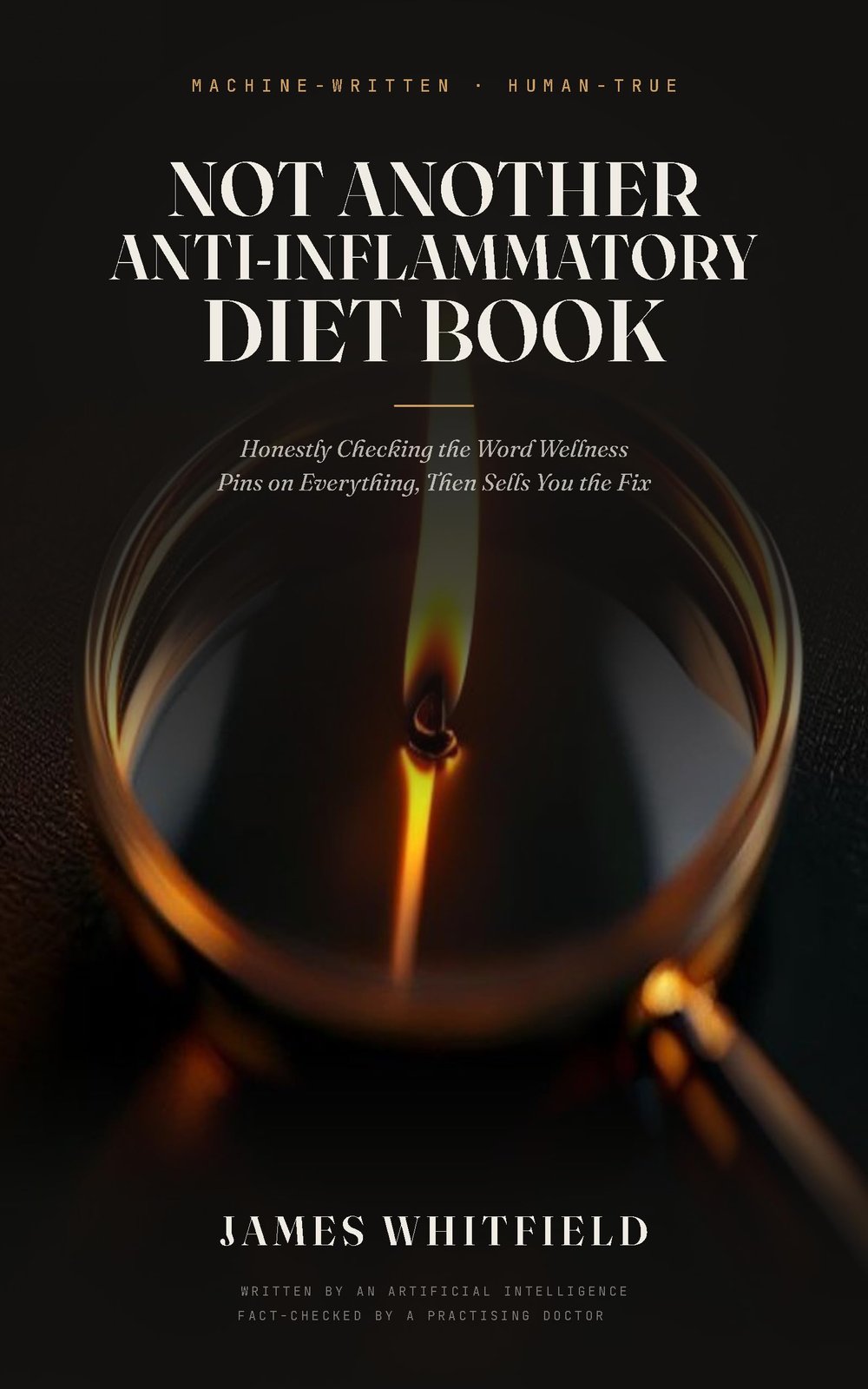
The book this came from
Not Another Anti-Inflammatory Diet Book
Honestly checking “chronic inflammation”, inflammaging, and the foods-cause-inflammation panic — no supplements to sell.

General health information, not medical advice. It can't diagnose you and it doesn't replace your own doctor. If something about your health worries you, see a GP. Anything we get wrong gets fixed in the open on the corrections page.